
Areas & information
Tuning, servicing
and repairs.
I’m based in London and tune, service and repair pianos across London and Surrey. I also travel elsewhere in the UK by arrangement, depending on the work needed.
Coverage
London &
Surrey.
At home, in the studio and on stage.
If you’re not sure whether I cover your area, send me your postcode and a little about your piano.
Services
How I can help
with your piano.
Tuning
Tuning is about getting the best sound from the piano in front of me. I can also advise on a suitable tuning schedule for your instrument and its environment.
Servicing & repairs
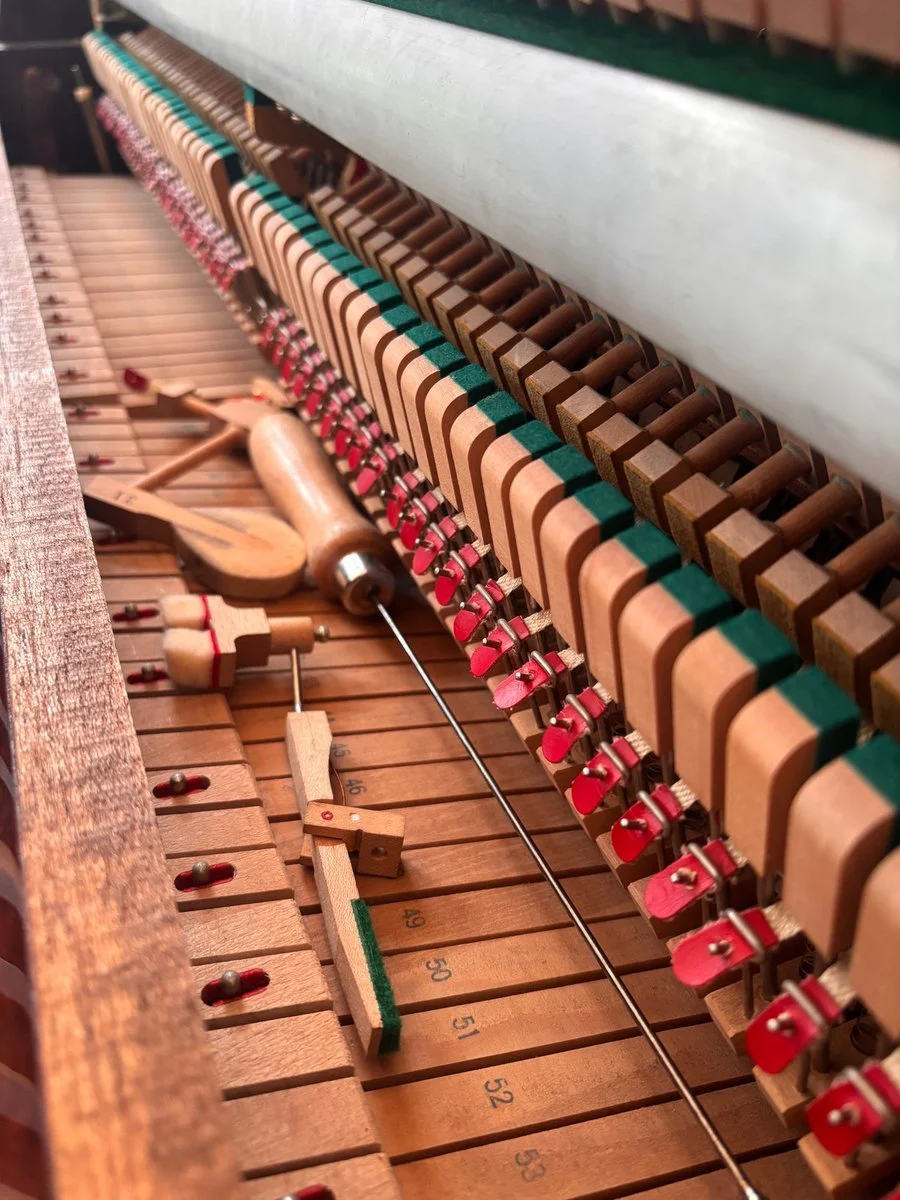
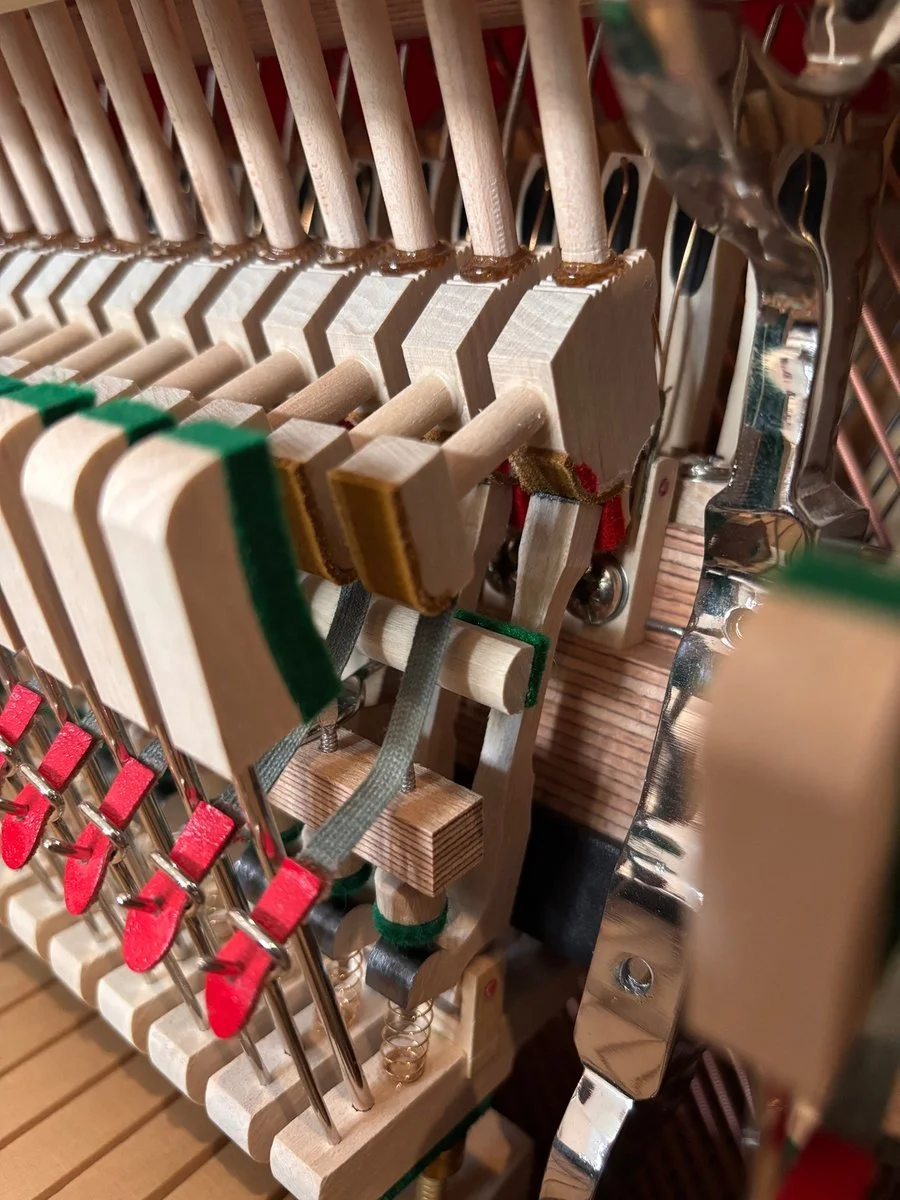
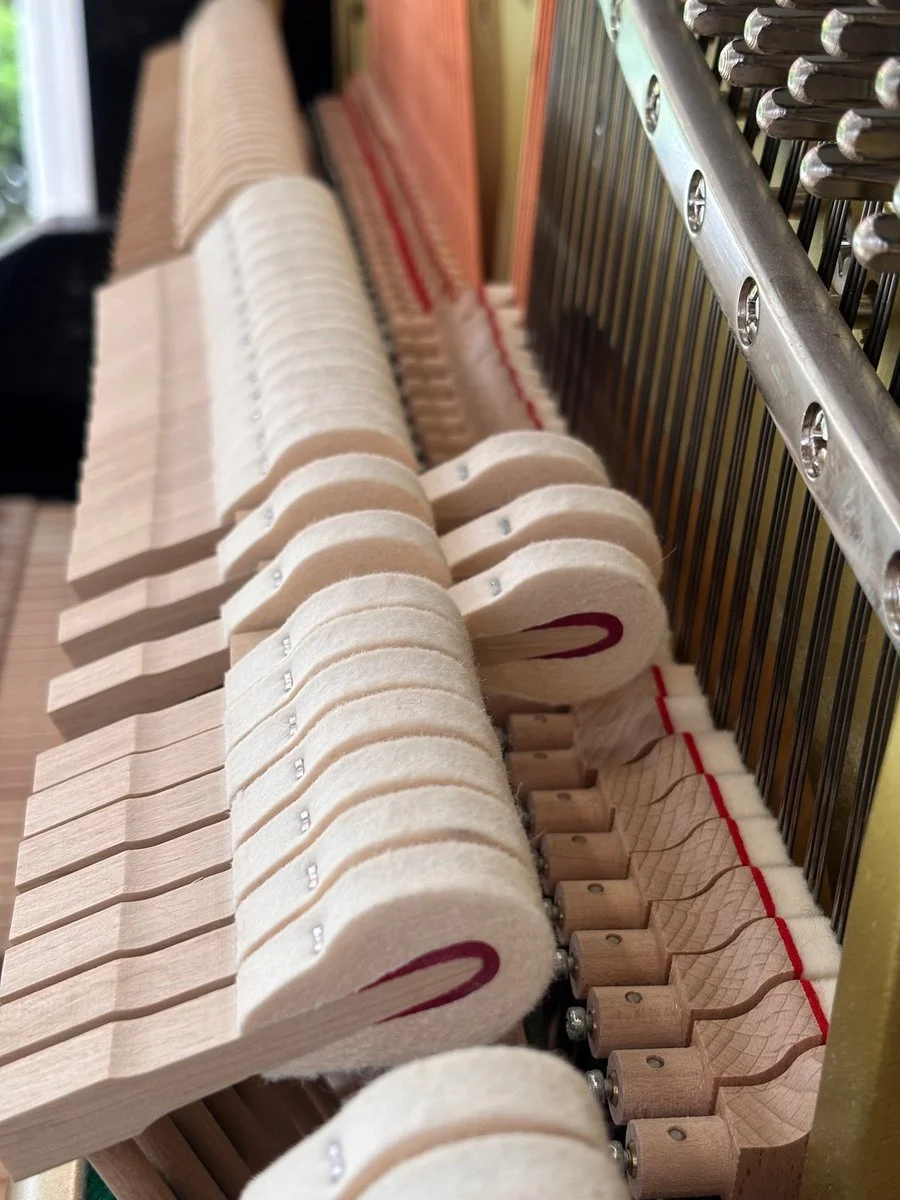
I work on how a piano feels to play as well as how it sounds. That can mean regulation, voicing or repairs. If something feels uneven or doesn’t sound right, I can have a look and explain what might help.
Concert & recording preparation
I work with artists and production teams to tune and prepare pianos for concerts, rehearsals and recordings.
Advice & valuations
If you’re buying, selling or insuring a piano, I can advise on its condition and value. I can also help you understand what work your own piano might need.
Restoration guidance
If your piano needs more extensive work, I can explain the options and put you in touch with specialists I trust.
Useful information
A few common
questions.
How often should my piano be tuned?
As a general guide, one to two tunings a year may be appropriate. The right frequency depends on its usage and the environment it is in.
What affects a piano’s tuning?
Changes in temperature and humidity can affect pitch and the overall stability of the instrument. I can advise on a suitable tuning and servicing schedule for your instrument, depending on the environment that it’s in.
Do you work outside London?
Yes, I work across London and Surrey and also travel elsewhere in the UK by arrangement, depending on the work needed. Send me your postcode and we can discuss a visit.
What should I include in my enquiry?
Your postcode, the make and model if you know it, and when the piano was last tuned. Tell me about anything you’ve noticed in its sound or touch. You’re welcome to send photos too.
Your piano’s environment
Underfloor heating
and humidity.
A piano is constantly responding to the environment it’s in. Keeping that environment stable makes a difference to its tuning and how it feels to play.
Keeping humidity stable.
Pianos are particularly sensitive to changes in humidity. Most piano manufacturers recommend a relative humidity of 40–60%. Keeping that level as stable as possible is important for your piano’s tuning and stability.
When conditions become too dry, the wooden components of the piano lose moisture and contract. This can cause the piano to fall in pitch and become increasingly unstable. Prolonged or severe dryness can also contribute to more serious problems, including soundboard cracks and loose tuning pins.
At the other extreme, excessive humidity causes wood and felt components to swell, which can lead to sticking keys and poor tuning stability. Both damp and dry conditions can affect how a piano sounds and feels to play.
Large or frequent fluctuations between these conditions are particularly problematic. The piano is continually responding to its environment, making it much more difficult for the instrument and its tuning to remain stable.
My first visit includes a tuning and assessment of your piano. I can advise on what it needs, taking its environment into account, and suggest a suitable tuning and servicing schedule.
Ask me about your pianoHave underfloor heating?
Underfloor heating can be particularly challenging for a piano. Direct heat rising beneath the instrument can create very dry conditions inside the piano and around the soundboard.
If you can’t position your piano away from direct heat, a suitable thermal mat beneath it is the first line of defence, helping to reduce the heat reaching the instrument.
It can’t completely isolate the piano from its environment or control the humidity of the room, so conditions around the instrument still need to be monitored.
Putting water in my piano? That’s a bit odd.
It might seem odd at first. A complete Piano Life Saver System uses a small water reservoir, a humidifier and a dehumidifier, controlled by a humidistat, to help stabilise humidity around the piano’s sensitive wooden components.
Rather than trying to control the humidity of the entire room, the system responds to conditions around the instrument. It adds moisture when needed and uses gentle warmth to lower the relative humidity when conditions become too damp.
You top up the water when the system tells you to. It needs a continuous power supply, regular pad changes and maintenance.
By keeping humidity around the piano more consistent, the system helps it stay stable all year round and hold its tuning for longer, even when conditions in the room are constantly changing.
Thermal mats for uprights and grands.
Tap or click a photo to view it larger.


The system in a grand or upright piano.
Tap or click a diagram to view it larger.


See the system’s components

Instruments I’ve worked on
From concert grands
to pianos at home.
Steinway & Sons · Fazioli · Yamaha · Bösendorfer · C. Bechstein · W. Hoffmann · Petrof · Schimmel · Kawai · Shigeru Kawai
